
County Special Education and Training Centre- Siberian Children in Wejherowo
A series that follows the path of Siberian Children. This time we would like to introduce Wejherowo, where Siberian Children have spent their time after returning to Poland.
(You can read the whole stories here)
Wejherowo, located in northern Poland, is an industrial city. It is also known as a major tourist destination because of the Baltic Sea. In summer, many tourists visit there by using Airbnb and ecotourism. In the suburbs, you can enjoy the peaceful scenery of the grasslands.
Wejherowo 1923: the arrival of the children and the establishment of the Educational Institution for Siberian Children
Children from the 1st and 2nd transports, who had previously stayed at a Caritas orphanage in the Wielkopolska Voivodeship, as well as children from the third transport brought by Anna Bielkiewicz, arrived in Gdańsk and were subsequently transferred to Wejherowo.
In Wejherowo, a special institution was established for them: the Educational Institution for Siberian Children, which operated from 1923 to 1928 in the complex of buildings of the former psychiatric hospital located at today’s 279 Jana Sobieskiego St. These are the same buildings that currently house the Powiatowy Zespół Kształcenia Specjalnego (County Special Education and Training Centre) in Wejherowo.
The opening of the Institution
On 30 April 1923, the opening of the Institution was a nationwide event. The ceremony was attended by the then President of the Republic of Poland, Stanisław Wojciechowski, the Primate of Poland, Cardinal Edmund Dalbor, and the Minister of the Treasury, Władysław Grabski. At a later time, the Institution was also visited by the Minister of Labour and Social Welfare Gustaw Simon, together with the Pomeranian Voivode Dr Józef Wybicki.
The children of the Institution participated in both curricular and extracurricular activities, including scouting. The so-called “Siberian Troop” (Hufiec Syberyjski) was associated with the development of the idea of maritime education.
Józef Jakóbkiewicz established an independent, coeducational Siberian Troop of the Polish Scouting Association named after Tadeusz Kościuszko on the premises of the Institution and became its commander. This activity was also linked to scouting camps and a sailing marina in Hel (Polish peninsula and city).

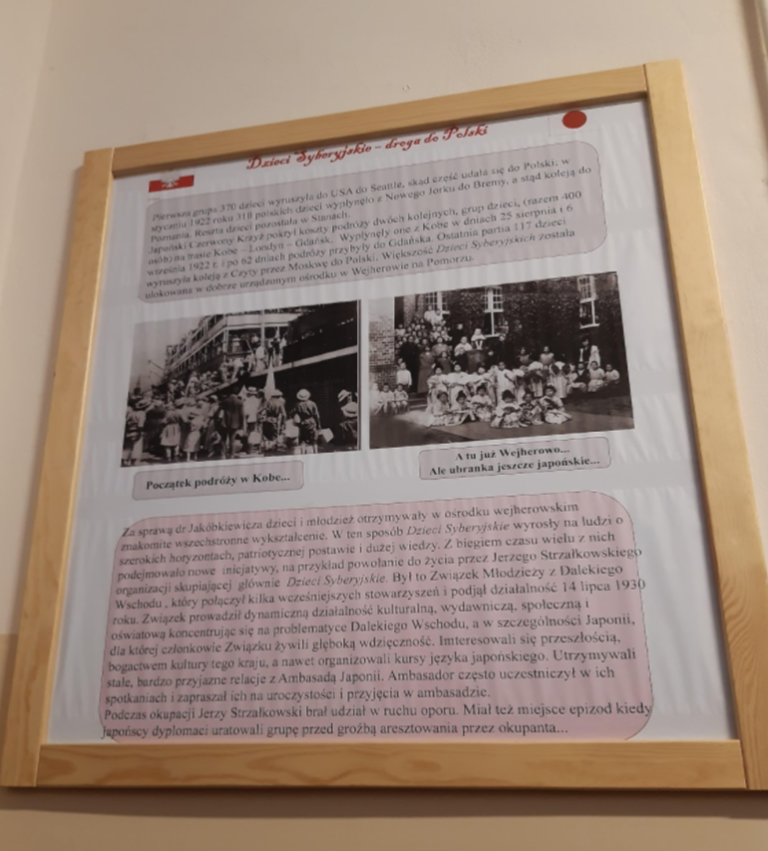
Exhibition in the school
The end of the Institution and the later history of the Centre
The Educational Institution for Siberian Children in Wejherowo operated until 1928. Some of the children were later transferred to Warsaw, while others-already independent-remained in Pomerania and the Kashubian region.
The formal beginning of the Centre in its present meaning is dated to 1933, when young people then described as “morally neglected” were transferred from Chojnice to Wejherowo. They were accompanied by Father Feliks Niklewski, who assumed the position of director of the Krajowy Pomorski Zespół Opieki Społecznej (National Pomeranian Social Care Complex). At that time, the complex consisted of a school for the deaf, a primary school, and a vocational school with a boarding facility.
After the end of the Second World War, in 1945, the institution resumed its activities. In 1949, it was taken over by the Ministry of Education and renamed the State Educational Institutions. One year later, on 1 September 1950, a Basic Vocational School began operating on its premises. An important milestone was the first vocational qualification examination held in June 1957, which all participating students passed successfully.
In 1957, the State Educational Institutions were divided into two separate centres:
- Educational and Care Centre No. 1 for persons with intellectual disabilities,
- Educational and Care Centre No. 2 for persons who are deaf.
The following years brought intensive development of educational and vocational infrastructure, including the construction of workshops, greenhouses, and sports facilities. In 1970, the first “life skills classes” were established, which later evolved into educational and therapeutic teams.
In 1975, Ryszard Jakubek became the director of the Centre. During his tenure, numerous investments were carried out, including the construction of a new sports hall, and a boarding house for girls. On 18–19 October 1985, the Centre was given the name of Janusz Korczak, and additional educational facilities were officially opened.
From 1993 to 2013, the position of director was held by Mgr Helena Ostrowska, under whose leadership the institution experienced dynamic development. Today, the Centre operates under the name Powiatowy Zespół Kształcenia Specjalnego in Wejherowo and is one of the largest institutions of this type in Poland. Its main area of activity is the education and support of persons with intellectual disabilities. The position of director is currently held by Małgorzata Woźniak.
Remembrance and contemporary visits
On the premises of the present-day Powiatowy Zespół Kształcenia Specjalnego in Wejherowo, there are materials commemorating the history of the Siberian Children, including a memorial plaque and archival photographs. This history is also reflected in accounts of visits by guests from Japan, who come to Wejherowo to learn about the history of the Institution and the site.
The Powiatowy Zespół Kształcenia Specjalnego in Wejherowo also regularly hosts other delegations.
In February 2020, the Centre was visited by the First Lady of the Republic of Poland, Agata Kornhauser-Duda.
On 15 September 2022, the institution was visited by the Ambassador of Japan to Poland, Akio Miyajima.
The Centre also welcomes delegations from Japan, including Akinori Nishikawa, Director of the museum in Tsuruga, Professor Stanisław Filipek, as well as school groups from Tsuruga.
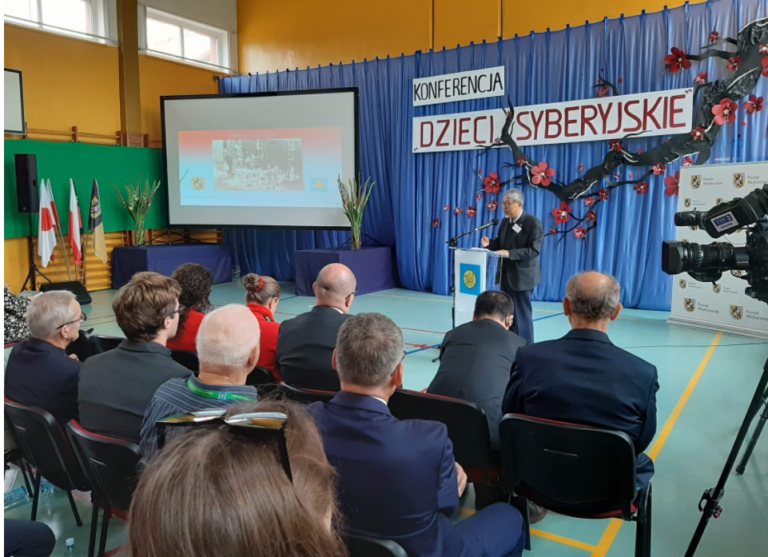
The symposium in November 2019 (at the place where Siberian Children stayed)
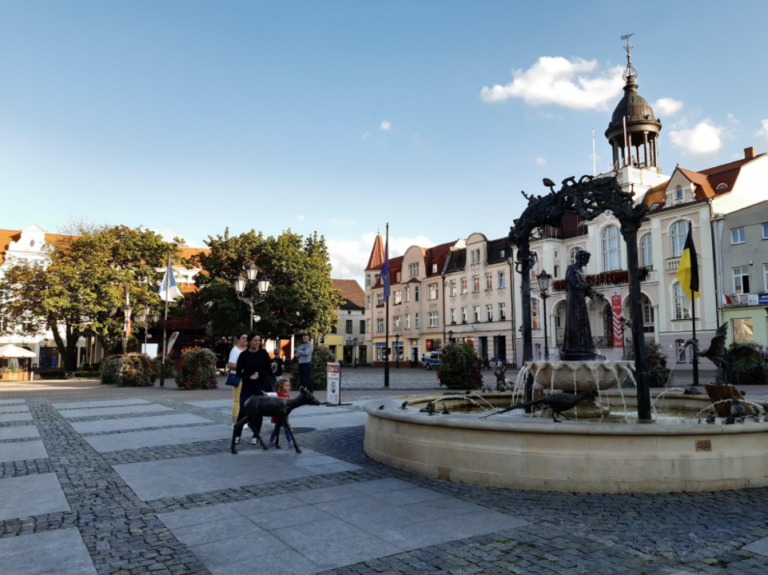
The city center of Wejherowo
Sources
- Powiatowy Zespół Kształcenia Specjalnego w Wejherowie, Historia placówki,
https://www.sosw-wejherowo.pl/historia/ - Powiatowy Zespół Kształcenia Specjalnego w Wejherowie, Dyrekcja,
https://www.sosw-wejherowo.pl/dyrekcja/ - Puls Wejherowa, Ocalone dzieci syberyjskie, 23 listopada 2013,
https://www.pulswejherowa.pl/3080/ocalone-dzieci-syberyjskie/ - Nasze Miasto Wejherowo, Z Syberii przez Kraj Kwitnącej Wiśni do Wejherowa – historia dzieci syberyjskich,
- GWE24, Wizyta młodzieży z Japonii w Wejherowie,
- Wikipedia, Polski Komitet Ratunkowy Dzieci Dalekiego Wschodu,
https://pl.wikipedia.org/wiki/Polski_Komitet_Ratunkowy_Dzieci_Dalekiego_Wschodu - Instytut Pamięci Narodowej – Przystanek Historia,
Zakład Wychowawczy dla polskich chłopców w Wejherowie w latach 1939–1945,